Showing posts with label flores tours. Show all posts

Saturday, November 19, 2011

Komodo, Rinca and Padar island


Komodo, Rinca, and Padar Island are the main islands of Komodo National Park. Famous for some of the world’s best dive sites and their popular inhabitant – the Komodo dragon – the area attracts thousands of tourists each year.
Komodo Island is the most visited place in Flores. Rinca, a smaller island where the Komodo dragons can also be found, is a good alternative to crowded Komodo Island.
Despite the invasion of tourists, you can still find some quiet and remote areas on these islands, particularly on Rinca and Padar. The islands’ interiors consist mostly of dry forests, where you can also encounter other animals than the Komodo dragon: water buffaloes, birds, pigs, and deer. The islands also offer unique beaches and good options for trekking.
Trekking on Komodo and Rinca Island
On Komodo, you can choose between different trekking routes, depending on your time and physical condition. All of them start from the ticket office at Loh Liang. A short trek takes around one hour and goes along flat trails within the dry forest. This option is suitable for visitors who do not have much time, for families with small children, or for people who prefer a relaxed and non-strenuous hike. The medium trek takes about 1 1/2 hours. It passes a waterhole where the Timor deer and wild pigs often come to drink. Sometimes, dragons can be found there lying around and waiting. You will climb Sulphurea Hill and Frigate Hill, where a magnificent view across the islands, bays and beaches awaits. The longer trek takes about 2 1/2 hours and leads you up another hill. You will pass the location where Komodo dragons used to be fed in front of enthralled tourist crowds. If you are up to a real workout, you may book a 4 – 8 hour hike in advance which will lead you up Mount Ara or to the island’s northern shore. 
Treks on Rinca Island start from the ticket office at Loh Buaya. You also have the option to choose between three trails. The shortest trek takes 30 minutes. It is an easy, shaded walk that passes an artificial waterhole before ascending to a small hill with a view over the bay. The one-hour medium trek winds between dragon nests and out into the sunshine across an exposed savannah that is studded with lontar palms. For the best opportunity to see dragons and their prey, choose the two-hour trek past a permanent waterhole and across steep, exposed slopes that offer breathtaking views.
Pink beaches
Padar Island features a natural phenomenon that you should not miss: a pink beach. This peculiar beach gets its color from red coral fragments. It is definitely a great place to spend some time by just laying back or enjoying the underwater world with your snorkeling equipment.
Another pink beach smaller in size can be found on Komodo Island as well. The shallow reef begins just in front of the beach. Being deep enough to snorkel at low tide and not too deep at high tide, it is one of the best snorkeling spots in the park.
Sources: www.florestourism.com

Tuesday, May 24, 2011

Piece of Mind: Flores’s ‘Modern’ Food Crisis

Piece of Mind: Flores’s ‘Modern’ Food Crisis
Laine Berman | March 21, 2011

Flores is one of my favorite places on earth — a small tropical island in eastern Indonesia with cool weather, amazing mountains and scenery, fabulous beaches and abundant greenery, including things to pick up and eat everywhere. One never goes hungry in Flores — or so I thought.

On this particular trip, I was in Flores evaluating two area NGOs that have implemented a project to help rural people provide home-care for their children with disabilities. Keep in mind, this is a very poor, isolated region. The villages we visited do not yet have electricity or access roads (we had to drive for hours on rutted trails and get out and walk when the passable roads ended). Houses have no permanent walls or floors, no bathing or toilet facilities and no furniture beyond a woven mat for sleeping or sitting.

There are no health services, almost no literacy and, amazingly, no food, or so I was told.

The NGO I was working with said these people were malnourished and only ate cassava. So when we scheduled our visit to these mountain communities, I requested that our hosts not buy any food to serve us and cook only ingredients they had harvested from their own gardens. So they did.

And we ate very well indeed. Instead of white rice bought at great expense several hours away in town shops, they made a delicious black rice that turned a beautiful dark purple when cooked. It is grown in fields, not paddies, with seeds handed down from one generation to the next.

They also prepared some amazingly tasty vegetable and egg dishes with pumpkin, papaya leaves and flowers as well as a delicious sambal. They even made a dish out of a butchered pig, which I didn’t partake of. Even though I am vegetarian, I usually ask my hosts to prepare a meat dish anyway because it is rare that they get the chance to eat meat without a special occasion.

So with such fabulous food, why on earth are their children malnourished?

Turns out, most of the amazingly tasty and healthy food served to me is grown to feed their pigs — not themselves or their children.

Somehow, these supposedly isolated villages have been infected by “modern” ideas that they should serve white rice (which has no fiber and few vitamins, just lots of carbohydrates) at each meal, along with instant noodles — locally considered a vegetable.

Babies are fed instant porridge, a processed food very high in sugar. Just add water — that may or may not be potable. Thus their children grow up addicted to sugar, since exceptionally sweet foods are what they are accustomed to.

Moms tell me that their children demand — and get — packaged sweets daily, rather than substantial meals, which they often refuse to eat.

Evidence of the widespread consumption of these packaged foods is seen everywhere you look, with wrappers tossed on the ground, in the ditches and on the floors, wherever.

Cassava will grow anywhere with little effort, so that is what these people mostly rely on to fend off hunger pains. While everyone has chickens, they told me that eggs cause asthma and that pregnant women and children should not eat them. Everyone has chickens, and many raise pigs and cows, but they are only butchered for special occasions and ceremonies — never for more mundane nutritional purposes.

Since maternal mortality rates are among the highest in the region, women intentionally undereat when pregnant in order to have small babies, thereby increasing their own chances of survival. Fetal malnutrition results in a very high rate of mental and physical disabilities. Since life is so hard here, even for the healthiest babies, severely deformed children are usually allowed to die. Horrible as it is, I can actually understand why they would do that.

How can I, as a sporadic visitor, hope to help these people re-evaluate their destructive practices? When did “modern” start being defined as nothing more than consumerism ignorant of tradition and even basic knowledge of health and safety?

I am painfully aware of my own status in these villages as an honored guest and my ability to give alternative examples through my actions. Hence, I always sit and talk with village elders and youth alike to demonstrate my own intense respect for their wisdom, their knowledge of the foods found in the surrounding forests and their natural desire to protect the fields, rivers and forests, which they believe are home to holy spirits. It’s not likely to have much impact, but it is better than doing nothing and not raising any concerns about how and why these destructive changes are happening.

Laine Berman is a freelance writer based in Yogyakarta.

Wednesday, April 27, 2011

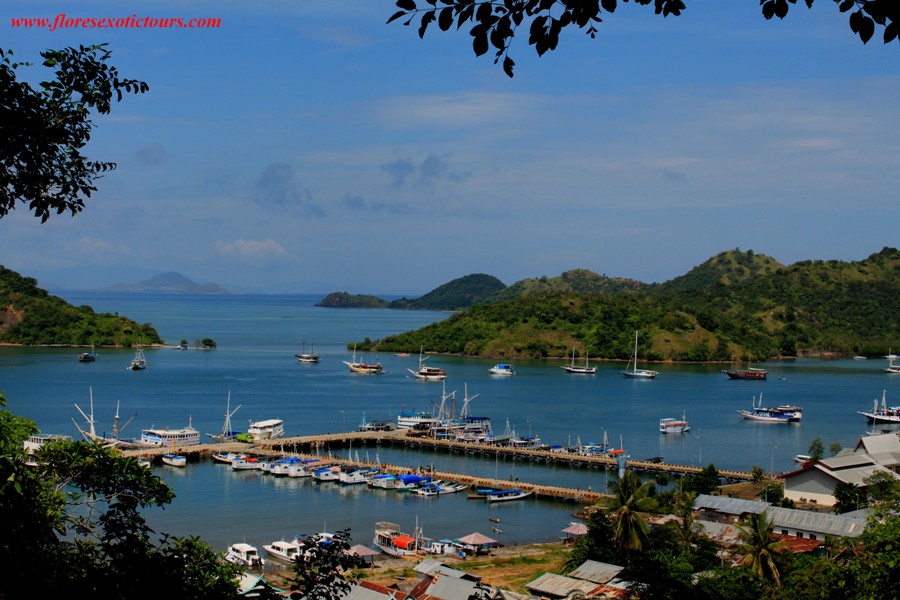
Labuanbajo-Flores


A little town inhabited by fishermen, lies at the extreme western part of Flores Island. The town serves as a jumping off point for the trip to Komodo Island. It is a beautiful area for water skiing, wind surfing, fishing and many other marine activities.