Friday, May 31, 2013

TARIAN CACI-MANGGARAI-FLORES BARAT-INDONESIA


Tarian Caci merupakan suatu permainan adu ketangkasan antara dua orang laki-laki dalam mencambuk dan menangkis cambukan lawan secara bergantian. Tarian Caci terlihat begitu heroik dan indah karena merupakan kombinasi antara Lomes (keindahan gerak tubuh dan busana yang dipakai), Bokak (keindahan seni vokal saat bernyanyi) , dan Lime (ketangkasan dalam mencambuk atau menangkis cambukan lawan). Pemain Caci juga dibekali kemampuan olah vokal untuk bernyani , dimana setelah menangkis cambukan lawan seorang pemain Caci secara spontan bernyanyi dan menyampaikan Paci .
Paci merupakan ungkapan berisi nama samaran atau alias dari pemain Caci tersebut yang berisi ungkapan tentang keberadaan dirinya, siapa dia atau sosok yang dia dambahkan. Tujuan dari Paci yaitu untuk mempengaruhi lawan menantang lawan dan juga untuk memotivasi atau meggelorakan semangat dari dalam diri. Kostum yang dikenakan pemain Caci sangat atraktif dan melambangkan keunikan dan karakter budaya yang dimiliki oleh orang Manggarai seperti: “Panggal” (penutup kepala) berbentuk tanduk kerbau dan salah satu lambang yang ditempatkan pada bagian kerucut atap rumah adat Manggarai. Melambangkan “rang” (kharisma dan kekuatan) orang Manggarai. “Ndeki” (berbentuk kuncir kuda) terbuat dari rotan yang dipilin dengan bulu ekor kuda, di tempatkan pada bagian ping gang, melambang kan kejantanan dan keperkasaan.
Pesona dan daya pikat lelaki Manggarai, sebagaimana seekor kuda jantan yang mengangkat ekor untuk memikat daya tarik sang betina. Sarung songke yang diikat sepanjang lutut, melambangkan kesantunan dan sikap patuh orang Manggarai. Celana panjang putih melambangkan kepolosan, kemurahan dan ketulusan hati. Tubi Rapa dikenakan sebagai manik-manik yang di ikat pada bagian bawa dagu melambangkan kebesaran dan keagungan lelaki Manggarai. Nggorong (gemerincing) diikat pada bagian belakang pinggang.
Selendang leros dililit di pinggang dan dijuntai pada bagian depan sarung. Perlengkapan permainan Caci seperti Larik (Cambuk) terbuat dari kulit kerbau dan dipilin dengan anyaman rotan pada ujungnya, Nggiling (perisai) terbuat dari kulit kerbau untuk menangkis cambukan lawan, Agang (berbentuk busur) terbuat dari rotan atau dahan bambu dipakai untuk menangkis atau menahan gempuran lawan.
Permainan Caci dilakukan antara dua kelompok dari dua kampong yang berbeda. Kelompok tamu di sebut “Meka Landang” sedangkan tuan rumah disebut “Mori Beo”. Pada saat pemain Caci beradu di dalam arena, tuan rumah, pria dan wanita yang berada di luar arena melakukan Danding (bernyanyi lagu Mang ga ra i da l am bentuk lingkaran dengan gerakan berputar) disertai gerakan Sae oleh sepasang pria dan wanita di tengah lingkaran.
Sementara itu beberapa wanita duduk berkelompok sambil memukul gong dan gendang yang bertalutalu untuk menyorakkan suasana. Sasaran cambukan dari pemain Caci adalah bagian badan sebelah atas dari perut hingga kepala. Pemukulan di bagian bawah perut dianggap pelanggaran. Apabila mengenai wajah dinamai Beke . Pemain Caci yang mengalami Beke dinyatakan kalah, harus keluar dari arena permainan pulang ke rumah atau ke kampung halamannya. Permainan Caci dipertunjukkan pada upacara 'Penti' (syukuran setelah panen), Pesso Beo (selamatan kampung), menyambut pengantin baru, tamu penting, dan dalam upacara gembira lain seperti Perayaan Hari Ulang Tahun Kemerdekaan.
Text: sailkomodo2013.nttprov.go.id/index.php/2012-12-05-06-20-09/tarian-daerah/112-tarian-caci
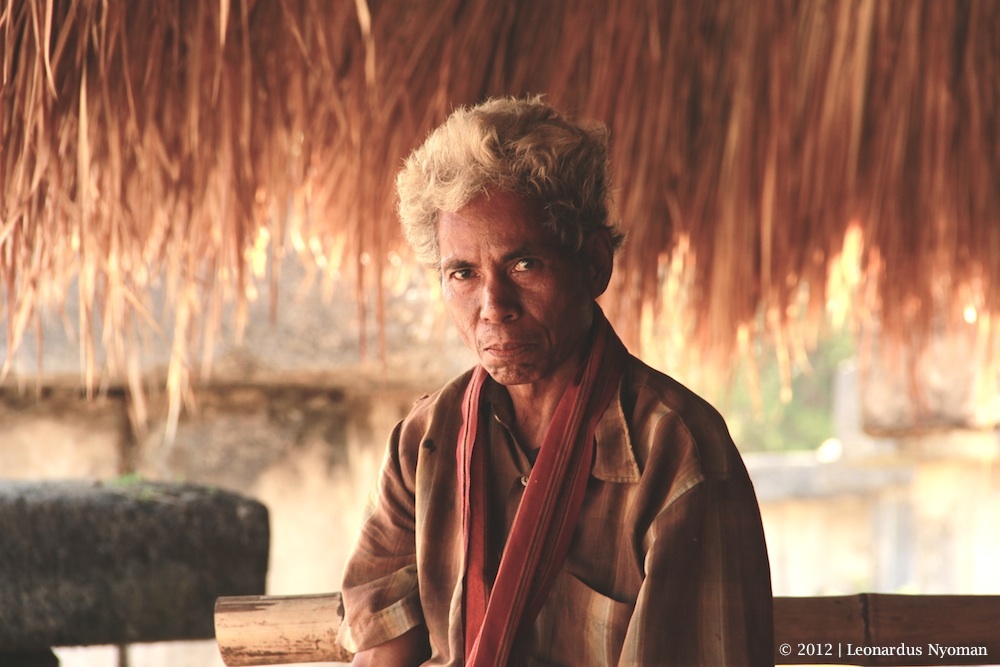
Photo : Leonardus Nyoman / 08123662110

Wednesday, May 29, 2013

Photo Ebulobo and Inerie Volcano

Ebulobo Volcano-Nagekeo Flores island

Ebulobo Volcano-Nagekeo Flores island

Ebulobo Volcano-Nagekeo Flores island

Ebulobo Volcano-Nagekeo Flores island

Ebulobo Volcano-Nagekeo Flores island

Inerie Volcano-Ngada-Flores island

Inerie Volcano-Ngada-Flores island

Sunday, May 5, 2013

Horse riding and trekking - Mbalata East Manggarai Flores island

Horse riding and trekking is our new product, this program combined with Flores adventure tours which start from Maumere in East Flores or Labuanbajo in West Flores. For horse riding and trekking located in Mbalata, start at 8 am from the beach of Mbalata, by horse riding to Watu Susu, a megalithic site of Rongga Koe in East Manggarai Regency. Horse riding takes for about 4 go and back hours then continue by trekking to see the graves and Batu Susu for about 1 hours, then ride back to the hotel.Savana, Aimere bay and Mount Ineria are the main landscape and sea view on the way to see, and also these megalithic site. more info: www.floresexotictours.com


Tuesday, April 9, 2013

The giant lotus (Victoria Amazonica) at Rana Tonjong Lake


Lake Rana Tonjong is located in Nanga Mbeling village, Sambi Rampas district, some 3 kilometer north of Pota. The lake spans 2,200 square kilometers and lies in low plains surrounded by hills in the west, north and south and paddy fields in the east. The whole lake is covered by the giant lotus (Victoria Amazonica), which bloom once a year from April to May. The lotus are endemic to the area.
This place can be reach by car from Ruteng for about 4 hours, can stay overnight in Pota at Teratai guest house.


Wednesday, February 27, 2013

Flores Exotic Tours Creating Awareness in ITB Berlin

Flores Exotic Tours Creating Awareness in ITB Berlin


The travel trade world is centered in Germany this month for the ITB (International Tourism Exchange) Berlin. The founder of Flores Exotic Tours, Leonardus Nyoman shares his experience in attending the world’s leading travel show.
This year is the 3rd time for Flores Exotic Tours’ representative participating in ITB Berlin. As a travel agent, Leo – so he’s called - finds it crucial to attend the travel show. Through the event, he is able to promote Flores not only to European market, but worldwide.
Leading experts in tourism field company representatives from 180 countries will crowd Messe Berlin from 6-10 March 2013. . Topical debate, interactive seminars, and presentations are available during the five-day event. As a result, participants will be able to get new ideas and see the trends on tourism development, management and marketing strategies – a goal Leo has in mind to grow his business.
He notes the most significant thing individual participants and exhibiting companies need to do is strengthening their business networks by getting into profitable partnership deals with industry peers. And in ITB the networking can be done through ITB Virtual Market Place - a special online feature provided to search and establish contacts with the right persons or companies’ representatives during the event.
ITB Berlin is definitely one of the great opportunities to promote Flores to the world. Leo uses the platform to spread information about Flores’ nature, culture, and traditional tribe to the global market. It is also the right place to create awareness by distributing Flores’ marketing materials such as brochure, booklet, video, and picture slides to targeted partners and clients.
All in all, Leonardus hopes to build new partnerships with more contacts and companies in ITB Berlin this year. He also wishes that his presence in the travel show strengthen the awareness about Flores among the travel industry throughout Indonesia and around the globe. As a result, the numbers of visitor to Flores will increase and in turn help Flores to become a more developed destination.
Article and images by Leonardus Nyoman.
Contact:
Flores Exotic Tours
Jalan Kakatua 8, Ruteng 86511
Flores, NTT, Indonesia
 
www.floresexotictours.com (English)
www.komododragontours.com (German)
Skype: leonardus.nyoman
Mobile : +628123662110
http://www.florestourism.com/news/flores-exotic-tours-creating-awareness-itb-berlin

Thursday, February 21, 2013

Sumba island – East Nusa Tenggara – Indonesia


Powerful Surf, living megalithic culture and fine ikat cloths
 
Facing the wide Indian Ocean, the island of Sumba in the province of East Nusatenggara is a surfer’s paradise. The large rolling Sumba barrels usually appear between May through October when waves can be either very high and strong or very flat as breaks are directly exposed to wide open ocean swells. This kind of powerful surf, however, though very challenging, should only be ventured by professionals. However, throughout the year, swells rise from 3 to 6 feet.


Although as yet little known on the tourist map, surprisingly the island of Sumba has a number luxurious, well frequented resorts. The Nihiwatu Resort, for example, describes itself as “the ultimate in privacy, exclusivity, views and romance”, and has been awarded Indonesia’s 2nd best hotel by Tripadvisor. Additionally there is the Sumba Nautil Resort both in the south west of Sumba, another favourite with surfers.  
Located between the islands of Komodo and Sumbawa, Sumba has two distinct climates. Its western part receives more rain, is more fertile and therefore has more inhabitants, whilst its eastern part is mountainous with grassy plateaus and valleys. Here is Sumba’s highest peak, the Wangga Meti rising 1,225 meters above sea level. . Capital of west Sumba is Waikabubak with its airport at Tambolaka, while the island’s largest town of Waingapu  in East Sumba.  In between are mostly villages where communities still adhere to the ancient belief of Marapu or ancestor worship of the megalithic era. Here you will find large, well carved megalithic tombs. Traditional clan houses are round with peaked thick thatched roofs resembling wide sunhats.   West Sumba plants rice, while East Sumba is famous for its water buffaloes and ikat weaving. Sumba raises Indonesia’s best horses.   
West Sumba 
The western part of Sumba has plenty to offer tourists who dare to venture into off-the-beaten- track destinations.  Here can be seen traditional villages, stone megalithic tombs even around West Sumba’s capital of Waikabubak, and watch rituals following the ancient belief of the islanders.The center of rituals Is the village of Tarung, a small remote hamlet west of Waikabubak, which the Sumbanese believe is their spiritual center.  It is the high priest of Tarung who officiates at the yearly Wula Padu ceremony honoring the deified ancestors at the start of the Marapu newyear at the arrival of the rainy season. The Festival is held around October or November. 
Once a year the exciting Pasola jousting festivals, the culmination of a series of fertility rituals are held on separate days at different locations on the island. Hundreds of warriors on horses charge into each other riding bareback, hurling spears. This festival, usually held between February and March, and is believed to bring fertility to the land.     
The world has come to know West Sumba closer since the opening of the Nihiwatu Resort in the southwest of the island, some 1.5 hours from Waikabubak. This resort is known for its exceptional surf and beautifully inspiring surroundings.  Surfing is best at the Kerewe, Marosi and Dasang beaches facing south where there are premier lefts and large double overhead surf.
East Sumba
Waingapu on the northern eastern coast of Sumba is the largest town and its seaport.
Around two kilometers from Waingapu is the traditional village of Prailiu, and some 10 km. away is the village of Kwangu, while 6 km from the city is the village of Labanapu, all three are famous for their exquisite ikat weaving. Women of Sumba produce some exemplary hand woven cloth with motifs of stylized horses, animals and people, in dark blue, red and black, white and yellow natural dyes.  Here visitors can watch the entire intricate and tedious process of ikat weaving. Look for the unique cloths with sewn in seashells.
Best surf in the east is on Manggudu island, which has both left and long right waves.

Text by: www.indonesia.travel
Photo by: Leonardus Nyoman

Friday, January 25, 2013

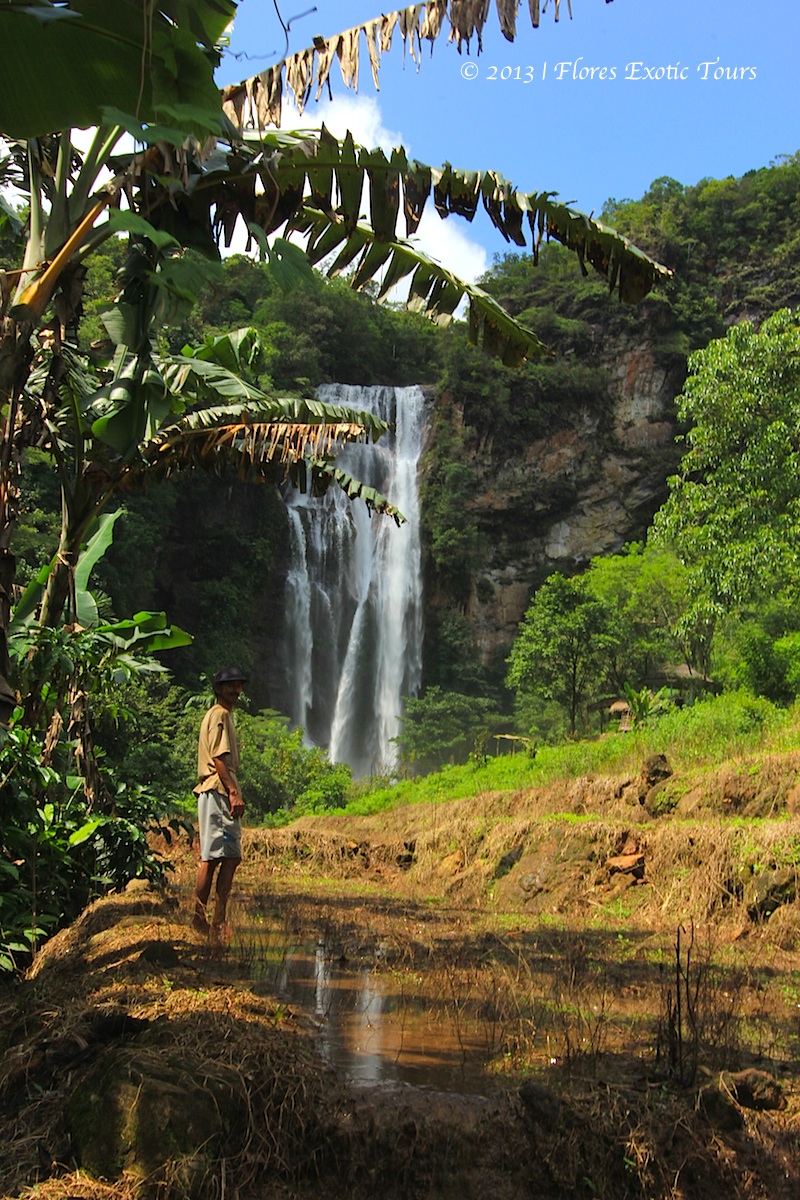
Cunca Rami waterfall - West Flores - Indonesia


The impressive Cunca Rami waterfall, with its many pretty pools that offer a refreshing, natural swimming experience, makes a fantastic day trip from Labuan Bajo. Starting from Werang, which is located 35km southeast of Labuan Bajo, it takes you about a 1½  hour scenic walk through an area which seems to be relatively untouched by modern civilization. Hiking through small villages and agricultural land, this walk is also a lesson in culture and agriculture. If you are with a local guide, it will be easy for you to get involved in conversations with villagers and farmers along the way. The trail leads you across various villages before it stretches out into open farmlands with water buffaloes, pigs, and goats grazing freely in the fields.
You can observe the various stages of rice cultivation and the traditional drying methods throughout the trail. Keep an eye out for banana, cacao, vanilla, and avocado plantations – it is amazing how everything grows and prospers seemingly effortless in this fertile area. A local guide will help you to identify the different plants that line the walk through this Eden-like setting. In line with tradition, the farming huts and village houses are made out of bamboo: a very durable and renewable material that is also used in many other Southeast Asian communities.

Facilities
Because of the poor condition of the roads that lead to these sites, the tour is rarely offered to tourists. Correspondingly, the tourist facilities are still very basic. There are no restaurants; so be certain to bring your own water and food supplies. However basic the circumstances, the stunning natural environment is well worth the bumping trip. The local guides in Labuan Bajo are familiar with the area around the waterfall, and gladly organize your trip according to your needs.

How to go there
Follow the main road from Labuan Bajo to Ruteng. At approximately 35km, you will reach a crossroad where you must turn right in the direction of Werang. The distance from the crossing to Werang is 10.5km. This road is in poor condition and difficult to pass in the rainy season. From Werang, it will take you a 45-minute walk to the waterfall.
Text by: www.florestourism.com
Photo by : Leonardus Nyoman
Tour available to this place: Flores Exotic Tours - www.floresexotictours.com

Tuesday, January 22, 2013

Weaving Ikat Sumba Island East Nusa tenggara


The ikat patterns are geometric or human and animal figures. East Sumba ikat cloths are characterized by striking figures of horses, deer, lions, birds, fish, skull trees, stars and other motifs. Stars, symbolizing descent from a celestial deity. Sea animals, shrimps, lobsters, represent the local coastal environment. Typical for East Sumba weaving is the skull tree motif.
Horses are a great feature in Sumba, symbol of heroism, being of economic and ritual value. Certain designs were restricted to aristocracy particularly the patola raty pattern, taken from Indian patola trading cloths.

The ikat textiles in East Sumba are important in life-cycle rites when they were exchanged between families and groups in the community. In marriage exchange of goods, the woman lineage counter the gifts of the man´s lineage with, among others, woven cloths.
text by: http://www.ikatland.com/category/15-east-sumba.aspx
Photo by: Leonardus Nyoman

Monday, January 14, 2013

Flores Exotic Tours will be at ITB in Berlin 6-10 March 2013

Flores Exotic Tours was established by a group of eight young Florinese in Ruteng and has gained years of experience in managing holidays in Flores and Bali since then.
Combined with active participation in local and international tourism training, this experience has brought Flores Exotic Tours to where it is now.
Flores Exotic Tours focuses on sharing valuable experiences with travellers wishing to know more about Flores and its magnificent Komodo dragon and other island in the East Nusa Tenggara Province ie; Sumba, Timor, Alor and Rote island.
These experiences include opportunities to enjoy Flores’ pure nature, its stunning beauty, as well as have a close encounter with the friendliness of the local community.
While enjoying the discovery of the world’s most diverse and exotic wildlife, Flores Exotic Tours also offers trips for travellers with special interests including ecotourism, community based ecotourism, trekking, and bird watching – such as those offered in Tado, Werang, Mbeliling, and, Wae Rebo villages, in West Flores. While appreciating the wonderful arts and culture of Flores, travellers also have a chance to support the sustainability of local tourism development, economy, and human resources that in turn shall contribute to the area’s improved standard of living.

Monday, November 12, 2012

ALOR ISLAND - EAST NUSA TENGGARA PROVINCE


Alor is the largest island in the Alor Archipelago located at the eastern-most end of the Lesser Sunda Islands that runs through southern Indonesia, which from the west include such islands as Bali, Lombok, Sumbawa, Komodo, and Flores.
To the east of the island across the Ombai Strait lie the islands of Wetar and Atauro, the latter belonging to East Timor. To the south, across the Strait of Alor, lies the western part of Timor. To the north lies the Banda Sea. To the west lies Pantar and the other islands of the Alor archipelago, and further yet the rest of the Sunda Islands.

Geography
Alor has an area of about 2800 km², making it the largest island of the Alor archipelago.
Kalabahi is the only town on the island of Alor, with a metropolitan population of about 60,000. The variety of goods obtainable in Kalabahi is surprising considering its size and location.
Alor is of volcanic origin and has very rugged terrain. The region near Kalabahi is the only flat area. This is why the Dutch placed the capital and the main harbor (Alor-Kecil) of the area here in 1911.
"The best" snorkelling and diving in Indonesia can be found in the Alor archipelago. Due to intriguing and often very strong currents it is best to snorkel or dive with someone who knows the area well. Transportation to Alor by TransNusa Trigana Air, from Kupang, Denpasar and Surabaya.

Economy
The island's infrastructure is only weakly built. The inhabitants practice mainly subsistence agriculture. The government seeks to change this with the help of international organizations. In the villages vanilla, tamarind, almonds and other nuts are cultivated. In the forests sandalwood is cut down for trade.
The latest geological explorations have discovered valuable resources such as gipsum, kaolin, petroleum, natural gas, tin, gold, and diamonds.
Alor's highly-esteemed snorkeling and diving promise an increase in tourism in the future. Depletion of the fisheries has however damaged the coral reefs in recent years.

Religion
Over 168,000 people live on Alor. Three-fourths are protestants, the rest are either Muslims or in a few villages Roman Catholics. Animistic rites and traditions are still strongly practiced.

Language
More than 15 different indigenous languages are spoken on Alor, the majority of them classified as Papuan or non-Austronesian. These include Abui, Adang, Hamap, Kabola, Kafoa, Woisika, Kelon, and Kui. In addition, Alorese (Bahasa Alor; ISO 639-3: aol) is a Malayo-Polynesian language which is spoken along the coast of the western and southern Bird's Head of Alor Island and in places on surrounding islands.
Many of the Papuan languages of Alor are endangered and are no longer being actively acquired by children. Some languages have fewer than 1000 speakers remaining. Significant linguistic documentation efforts have been undertaken recently by Leiden University.
The language of daily communication is Alor Malay, a unique Malay variety with some similarities to Kupang Malay. Indonesian is taught in schools and used widely in media.

Sources           : http://en.wikipedia.org/wiki/Alor_Island
Photography  : Leonardus Nyoman / www.floresexotictours.com